
We All Left the House
I am Amaseel from Bahrain, but I live in Canada. I am from the village of Al-Dair, but I live in the city of Windsor. I was born in Muharraq Hospital on 30/7/2003, yet I have celebrated more of my birthdays outside Bahrain. I am the daughter of Ali and Fadaa, Haji Ahmed and Haji Abbas.
My father left Bahrain in 2011. I was in second grade at the time and went to the Salam Elementary School for Girls. I lived with my mother and my brother Bassel in Bahrain in our house built by Baba Haji (my grandfather), and I have a picture of me with him when our house was still under construction. My grandfather died less than a year after we moved into the house and was buried in the city of Mashhad on the grounds of the Imam Reza (pbuh) shrine, and two years later my father left our house.
My father used to drop me off at school in the morning in his GMC Envoy and wait for me at the school gate in the afternoon. In the second semester of 2011, I missed my father’s rides. After school, I used to go to my friend’s house and my mother would come late to pick me up, since she had a job as a teacher and her workplace was far from my school.
We used to go to my grandfather’s house, Abbas, in Manama every Thursday, and meet with my cousins, especially my cousin, aunt Hadia’s daughter named Fatima, who was my close friend. On some days, she would come to our house and sleep over, and sometimes she would go with me on Fridays to Baba Haji’s house in Al-Dair.
When my mother would travel to Lebanon to visit my father on short holidays, I would sleep over at Fatima’s home. My aunt, her daughter and I, used to pass the time and have fun with art crafts.
On spring break in 2015, like usual we were in Lebanon. On January 31, while my father, mother and I were heading to the south on a trip, my father suddenly stopped. I had earphones on listening to a song that I can not remember now. I paused the song and heard my father say: They stripped me of my nationality. I did not take much notice of the matter, since I did not understand what it meant. I continued to listen to the song, and my father resumed our ride to the south. I do not recall my father being sad or agitated.
In the summer of the same year, we began our preparations for leaving Bahrain, as I was about to start changing the decor of my room. I began to understand that the revocation of my father’s nationality means that I would abandon my room without leaving my mark on it.
I wanted to design my room before leaving Bahrain .It was my dream room. I wanted to have a big white bed and a large white dresser. I also wanted my wardrobe to be white with a large mirror next to it, surrounded by white lighting, and I wished I had a desk that was big and white as well with a black chair and a pink curtain in the room. I also wanted to have a white teddy bear and another pink and violet one. This is the room of my dreams. I hope to make this dream come true when I return to Bahrain.
We left home and I left my room behind. My mother and I arrived in Lebanon, and Bassel had left and arrived there weeks before us. On the second day we completed the procedures at the United Nations who told us: You cannot go back to Bahrain anymore. We stayed in Lebanon for seven months, but still the decision allowing us to travel was not issued. We missed the first semester of school, since we thought that we would be in Canada at the end of summer.
At the end of October, my father received a call from the International Organization for Migration (IOM), informing him that they scheduled November 18, 2015 as our date of travel. We were very happy by this. We prepared everything and ourselves for leaving, but the trip was postponed days before our departure. Another date was later set on December 14, but we were contacted hours before traveling and informed that the trip was cancelled. We became very upset and felt disappointed, as we were left without a travel date. The travel dates were canceled, because my father was stateless and special security measures were required for getting him out of Lebanon. We found out that the reason was related to Lebanon, not the United Nations. I began to understand more the meaning of being stripped of your nationality after our trip was cancelled several times.
Following the New Year, they called and said that our date of travel ‒ for the third time ‒ was set on January 18, 2016. We expected the trip to be canceled as well. We went to the airport that night, anticipating a phone call cancelling the flight. We left Lebanon with a Lebanese passport, with which we were allowed to only travel once.
February 10, 2016 was my first day at school. It was a difficult day. I did not know how to act or what to do. I started to make friends from Iraq and Syria. I was the only Bahraini and the only one from the Gulf. They did not understand everything I said, but then they began to understand and sometimes use the words I say. We turned this situation into a fun game, so I started to collect all the strange Bahraini words I hear at home or when I call my grandmother (Mama Sabah) and jot them down on a piece of paper. I now have this list of words that I play with and which makes me feel that I will always remain a Bahraini.
One day I was in school with my friends from Iraq and Syria. They were talking about their clans, and asked me which clan I was from? I told them that I do not have a clan. I did not understand what a clan meant, and I do not know whether or not my father would have been stripped of his nationality if we had belonged to a clan.
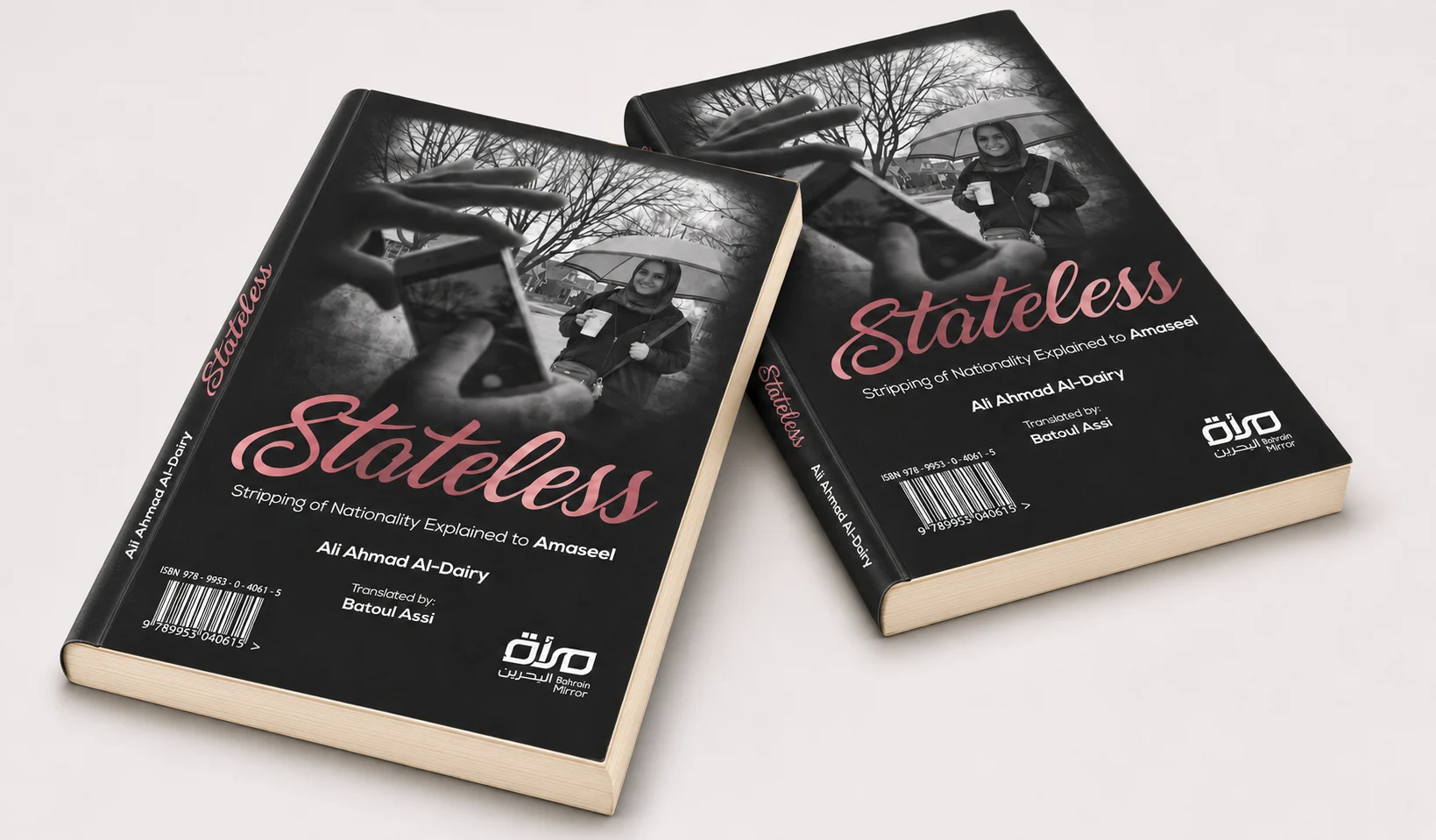
At the end of our first year in Canada, I found out that my cousin Fatima won first place on the level of Gulf States in the Sheikha Latifa Bint Mohammed Award for Childhood Creativity. She had participated in the competition in previous years, but was not lucky enough to win. This year; however, she won first place. I told her I wanted to participate with her in the competition. I asked her to send me the terms and conditions of the contest, but I realized that it exclusively was for Gulf States. I gave up and was upset that I was no longer Amaseel, the Salam School girl. That is the reason why I decided to take part in my father’s book instead of participating in the contest.
I miss our big family gatherings and my aunts dearly, for I grew up on their care and love. I miss my cousins. Inside my locker at school I had a picture of my little cousin Sarah. I left when she barely could pronounce my name, and now I hear her say it clearly as if she is telling me: Do not worry, all the children of our family chant your name and keep your image in their hearts.
We all left the house ‒ my grandfather first, my father second, and then us third. This is what I comprehend from the revocation of citizenship. As for my father’s explanation, I leave it for you, and I also leave you with his introduction, which I begged him not to write, so it would not overshadow mine.
Amaseel Ali Al-Dairy
February 14, 2017